
Understanding Valve Pressure Ratings: PN10, PN16, PN25 and PN40
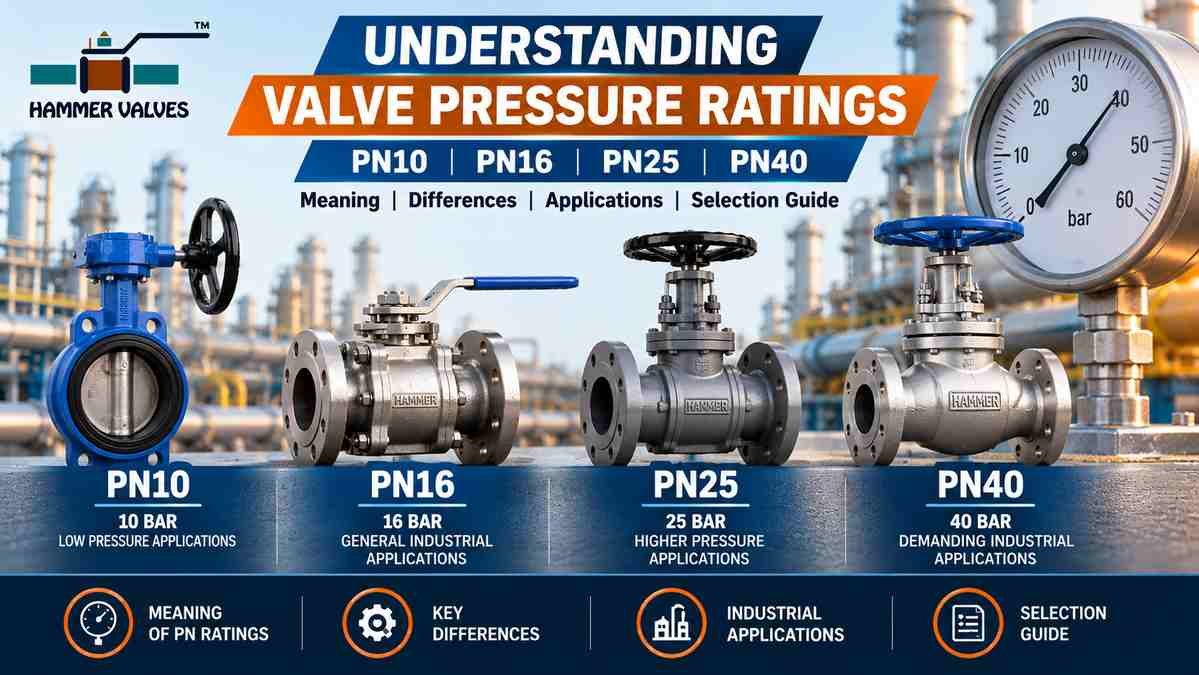
Industrial valves are designed to control, regulate and isolate the flow of liquids, gases and steam in different operating conditions. However, selecting the right valve involves more than choosing its type, size or material. One of the most important factors is its pressure rating.
You may have seen markings such as PN10, PN16, PN25 and PN40 on industrial valves, flanges and pipeline components. These markings indicate the nominal pressure designation of the equipment and help engineers identify whether it is suitable for a particular piping system.
But what do these ratings actually mean? Is a PN16 valve suitable for every application operating at 16 bar? What is the difference between PN10 and PN40? And how should you select the correct pressure rating for your industrial pipeline?
In this guide, we explain PN pressure ratings, their differences, applications and the important factors to consider before selecting an industrial valve.
What Does PN Mean in Valve Pressure Ratings?
PN stands for Nominal Pressure. It is a standardised pressure designation used to classify valves, flanges, fittings and other piping components.
The number following PN represents the nominal pressure designation. For example:
- PN10 – Nominal pressure designation 10
- PN16 – Nominal pressure designation 16
- PN25 – Nominal pressure designation 25
- PN40 – Nominal pressure designation 40
These designations are commonly associated with nominal pressure values expressed in bar under specified reference conditions.
However, it is important to understand that PN16 does not automatically mean a valve can safely operate at 16 bar under every temperature and service condition. The actual allowable working pressure depends on factors such as the valve material, design standard, operating temperature and pressure-temperature rating.
In simple terms, PN helps identify the pressure class of a component, but the manufacturer’s pressure-temperature rating must always be checked before installation.
Understanding PN10, PN16, PN25 and PN40
Different industrial applications require different pressure ratings. A water distribution pipeline may operate under different pressure conditions compared with a boiler system, chemical processing plant or high-pressure industrial pipeline.
Here is a basic comparison of commonly used PN ratings.
| Pressure rating | Nominal pressure designation | Typical selection context |
|---|---|---|
| PN10 | 10 bar | Lower-pressure water and utility systems |
| PN16 | 16 bar | General industrial and water distribution systems |
| PN25 | 25 bar | Higher-pressure industrial pipelines |
| PN40 | 40 bar | Higher-pressure process and industrial systems |
Note: These are nominal designations, not guaranteed maximum operating pressures for every valve. Always verify the pressure-temperature limits of the specific product.
1. PN10 Valves
PN10 valves belong to a nominal pressure designation of 10 bar.
They are commonly considered for lower-pressure applications where the operating conditions fall within the manufacturer’s specified pressure and temperature limits.
Common application areas include:
- Water distribution networks
- General utility pipelines
- Water treatment systems
- Certain HVAC installations
- Low-pressure industrial services
Important selection factors:
Before selecting a PN10 valve, check the maximum operating pressure, temperature, fluid type and pressure surges within the pipeline. The valve must be suitable for the actual system conditions, not just its normal operating pressure.
2. PN16 Valves
PN16 is a widely used nominal pressure designation in industrial and water-related piping systems.
It is often considered for applications requiring a higher nominal pressure designation than PN10.
Common application areas include:
- Industrial water pipelines
- Water treatment plants
- General process piping
- HVAC systems
- Pumping stations
- Utility and distribution networks
Why is PN16 commonly selected?
PN16 components are available across several valve and flange product categories. They can be suitable for many general industrial applications when their material, construction and pressure-temperature ratings match the service requirements.
However, PN16 should not be selected solely because the normal operating pressure is below 16 bar. Temperature-related pressure derating and surge conditions must also be considered.
3. PN25 Valves
PN25 is a higher nominal pressure designation than PN10 and PN16.
It is considered for industrial systems that require components designed for higher pressure conditions.
Common application areas may include:
- Industrial process pipelines
- Higher-pressure water systems
- Selected chemical processing applications
- Pump discharge lines
- Industrial utility services
What should you check?
The valve body material, pressure-containing components, end connections, sealing arrangement and applicable design standard must be suitable for the intended service.
For aggressive chemicals or elevated temperatures, material compatibility and pressure-temperature limitations are particularly important.
4. PN40 Valves
PN40 represents a higher nominal pressure designation than PN25, PN16 and PN10.
It may be considered for demanding industrial applications where the piping system requires a higher pressure class.
Common application areas may include:
- Higher-pressure industrial process lines
- Selected chemical and petrochemical services
- Industrial utility systems
- High-pressure liquid applications
- Certain process and plant installations
Important considerations:
PN40 valves must be selected according to the actual operating and design conditions. The valve’s pressure rating, material specification, temperature limits and connection standard should all be verified.
For steam and other high-temperature services, never assume that a PN40 valve can operate at 40 bar. Refer to the manufacturer’s pressure-temperature data and the applicable piping design requirements.
Difference Between PN10, PN16, PN25 and PN40
The main difference between these pressure designations is their nominal pressure classification.
| Parameter | PN10 | PN16 | PN25 | PN40 |
|---|---|---|---|---|
| Nominal designation | 10 | 16 | 25 | 40 |
| Nominal pressure value | 10 bar | 16 bar | 25 bar | 40 bar |
| Relative pressure class | Lower | Medium | Higher | Highest among these four |
| Typical selection | Lower-pressure systems | General industrial systems | Higher-pressure systems | Higher-pressure applications |
The table provides a general comparison. It should not be used as a substitute for the manufacturer’s technical datasheet or the applicable pressure-temperature rating.
How Does Temperature Affect Valve Pressure Ratings?
Temperature is one of the most important factors when selecting an industrial valve.
A valve that is suitable for a particular pressure at ambient temperature may have a lower allowable working pressure at elevated temperatures.
This happens because the mechanical properties of materials can change as temperature increases. The strength of the valve body, sealing components and other pressure-containing parts must be considered.
For example, a valve made from cast iron may have different pressure-temperature limitations compared with a valve made from carbon steel or stainless steel.
The following factors should be checked:
- Operating temperature: Identify the minimum, normal and maximum operating temperatures.
- Valve body material: Confirm that the material is suitable for the operating conditions.
- Sealing material: Check whether the seat, gasket and packing materials can withstand the temperature and pressure.
- Pressure-temperature chart: Refer to the manufacturer’s approved technical data.
- Applicable standard: Confirm that the valve is designed and tested according to the relevant product standard.
Always use the manufacturer’s pressure-temperature rating rather than assuming the nominal PN value remains constant at every temperature.
PN Rating vs Class Rating: What Is the Difference?
Another common question in industrial valve selection is the difference between PN ratings and Class ratings.
PN designations are commonly used in metric piping systems, while Class designations are widely used in ASME-based piping systems.
Examples include:
- PN10
- PN16
- PN25
- PN40
- Class 150
- Class 300
- Class 600
- Class 900
Although both systems classify pressure-related design requirements, they are based on different standards and rating systems.
PN16 is not automatically equivalent to ASME Class 150. Their allowable pressure limits can differ depending on the material, temperature and applicable standard.
When connecting valves to existing pipelines, check the flange standard, dimensions, facing, bolt pattern and pressure-temperature rating. Do not assume that two components are interchangeable just because their nominal pressure values appear similar.
How to Select the Correct Pressure Rating for an Industrial Valve
Choosing the right pressure rating is essential for safe and reliable pipeline operation. An incorrectly selected valve can lead to leakage, equipment damage, unexpected shutdowns and safety risks.
Follow these steps when selecting a valve pressure rating.
1. Identify the Maximum System Pressure
Determine the maximum design pressure of the pipeline, not just its normal operating pressure.
Consider pump discharge pressure, pressure surges, water hammer and other possible operating conditions.
2. Check the Operating Temperature
Identify the temperature range of the fluid. Verify the pressure-temperature rating of the selected valve material and construction.
3. Select the Correct Valve Material
Valve body materials should be compatible with the fluid, pressure and temperature.
Common materials include:
- Cast Iron (CI)
- Cast Steel (CS)
- Stainless Steel (SS304 and SS316)
- Ductile Iron
- Bronze
- Brass
The suitability of each material depends on the application and the exact material grade.
4. Verify the Applicable Standard
Check the relevant valve and connection standards. Depending on the product and application, these may include EN, ISO, API, ASME or other applicable standards.
Also verify flange dimensions and compatibility with the existing pipeline.
5. Consider the Fluid and Application
The valve must be suitable for the fluid passing through it.
For example, water, steam, oil, gas and corrosive chemicals may require different body materials, seat materials and valve designs.
6. Check the Manufacturer’s Technical Datasheet
Before finalising the selection, review:
- Nominal pressure designation
- Maximum allowable working pressure
- Operating temperature range
- Body and trim materials
- End connection details
- Applicable design and testing standards
- Pressure-temperature limitations
A qualified technical team should review the selection for critical or high-pressure applications.
What Happens If You Select the Wrong Valve Pressure Rating?
Selecting a valve with an unsuitable pressure rating can create serious operational problems.
Some possible consequences include:
1. Leakage: Excessive pressure or unsuitable operating conditions can damage sealing components and cause leakage.
2. Valve body damage: Operating beyond the permitted pressure limits can put excessive stress on pressure-containing components.
3. Reduced service life: Repeated pressure fluctuations and unsuitable operating conditions can increase wear and maintenance requirements.
4. Unplanned shutdowns: Valve failure can interrupt production and affect the overall plant operation.
5. Safety risks: Failure in high-pressure or hazardous-fluid applications can create serious risks for equipment and personnel.
Correct valve selection should always be based on engineering requirements and verified product specifications.
Which Industries Require Different Valve Pressure Ratings?
Pressure ratings vary according to the application, process conditions and piping design.
Some examples include:
| Industry | Typical valve selection considerations |
|---|---|
| Water treatment | Pipeline pressure, water quality and corrosion resistance |
| Oil and gas | Design pressure, fluid properties and applicable industry standards |
| Chemical processing | Chemical compatibility, temperature and pressure |
| Power plants | Steam conditions, temperature and pressure |
| Pharmaceutical | Process requirements, cleanliness and material compatibility |
| Textile | Utility pressure, fluid type and operating temperature |
| Food and beverage | Hygienic requirements and material suitability |
| HVAC | System pressure, temperature and flow requirements |
The final PN designation must be determined from the actual system design and the valve manufacturer’s specifications.
Why Choose C.P. Valves Industry for Industrial Valve Requirements?
C.P. Valves Industry has been serving the valve industry since 1963, offering industrial valve solutions for different applications and sectors.
Under its HAMMER brand, the company provides a range of industrial valves designed for various pipeline and process requirements.
Its product range includes:
- Ball Valves
- Butterfly Valves
- Gate Valves
- Globe Valves
- Strainers
- Non-Return Valves
- Foot Valves
- Air Vent Valves
- Pressure Reducing Valves
- Other industrial valve products
The right valve should always be selected according to the required pressure rating, material, temperature, fluid and application.
Explore the HAMMER Valves product range or visit C.P. Valves Industry to learn more about its industrial valve solutions.
For product selection and technical enquiries, contact the C.P. Valves Industry team.
Frequently Asked Questions (FAQs)
1. What does PN16 mean in a valve?
PN16 is a nominal pressure designation commonly associated with a 16 bar nominal pressure value under specified reference conditions. The actual allowable working pressure depends on the valve material, temperature, design and applicable standard.
2. What is the difference between PN10 and PN16?
PN10 and PN16 are different nominal pressure designations. PN16 has a higher nominal pressure designation than PN10. The correct choice depends on the pipeline’s design pressure, temperature and valve specifications.
3. Is a PN25 valve suitable for 25 bar pressure?
Not necessarily under every operating condition. A PN25 designation is associated with a nominal pressure value of 25 bar, but the actual allowable pressure must be confirmed from the manufacturer’s pressure-temperature rating.
4. What does PN40 mean?
PN40 is a nominal pressure designation associated with a 40 bar nominal pressure value under specified reference conditions. Its actual working pressure limit depends on the valve’s design, material and operating temperature.
5. Is PN16 equal to Class 150?
No. PN16 and ASME Class 150 belong to different pressure designation systems. They should not be treated as automatically equivalent. Always verify the relevant pressure-temperature ratings and connection dimensions.
6. Which PN rating is best for industrial applications?
There is no single best PN rating for all industrial applications. PN10, PN16, PN25 or PN40 should be selected according to the system’s design pressure, temperature, fluid properties and applicable standards.
7. Does temperature affect valve pressure ratings?
Yes. The allowable working pressure of a valve can change with temperature. Always check the manufacturer’s pressure-temperature chart before selecting or installing a valve.
Conclusion
Understanding valve pressure ratings is essential for selecting the right industrial valve. PN10, PN16, PN25 and PN40 represent different nominal pressure designations used across industrial piping systems.
However, choosing a valve should not be based on the PN marking alone. Operating pressure, temperature, valve material, fluid compatibility, connection standards and manufacturer specifications must all be considered.
By checking these factors before installation, industries can improve pipeline reliability, reduce the risk of leakage and support safer plant operations.
Looking for industrial valves for your application? Contact C.P. Valves Industry to discuss your valve requirements and find a suitable solution.


