
Globe Valve vs Gate Valve: Key Differences, Applications and How to Choose the Right Valve
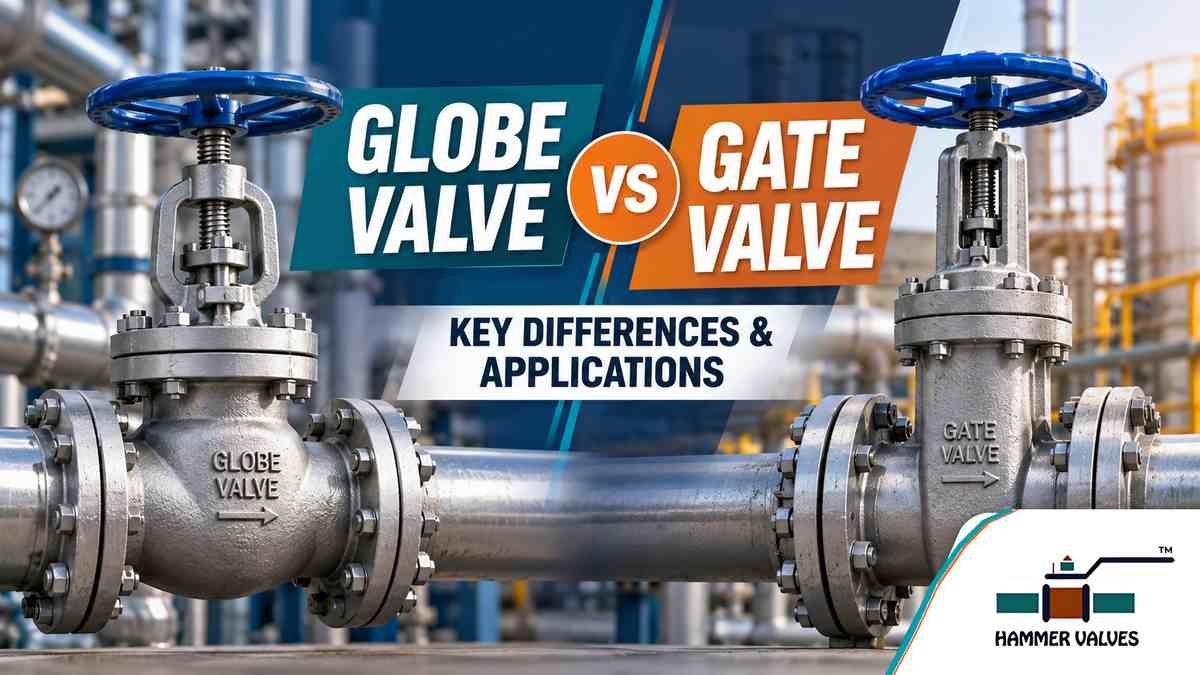
When selecting an industrial valve, choosing the right design can make a significant difference to flow control, system efficiency and maintenance requirements. Two commonly used valves in industrial piping systems are gate valves and globe valves. Although both can start and stop fluid flow, they work differently and are designed for different operating requirements.
Understanding the difference between a globe valve vs gate valve helps plant engineers, maintenance teams, project managers and industrial buyers select the right valve for their applications.
For example, if a pipeline needs a valve that remains fully open during normal operation, a gate valve may be the right choice. However, if an operator needs to adjust the flow of steam, water or another process fluid, a globe valve is often more suitable.
In this guide, we will explain how these valves work, compare their key features, discuss their industrial applications and help you decide which one fits your requirements.
C.P. Valves Industry, we manufacture Hammer valves and provide valve solutions for industrial, plumbing, firefighting and HVAC applications. Our product range includes both gate valves and globe valves for different piping requirements.
What Is a Gate Valve?
A gate valve is an industrial valve primarily designed to start or stop fluid flow in a pipeline. It operates by moving a gate or wedge up and down inside the valve body.
When the valve is fully open, the gate moves away from the flow passage, allowing fluid to pass through with relatively low resistance. When the valve is closed, the gate moves against the seating surfaces to stop the flow.
Gate valves are commonly installed in pipelines where the main requirement is isolation rather than continuous flow adjustment.
How Does a Gate Valve Work?
A typical gate valve uses a handwheel, stem and gate mechanism.
When the operator turns the handwheel, the stem moves the gate upward or downward. Raising the gate opens the passage, while lowering it closes the passage.
Gate valves are generally intended for two operating positions:
- Fully open: Allows fluid to pass through the pipeline.
- Fully closed: Isolates the downstream section of the pipeline.
A gate valve should not normally be used in a partially open position to regulate flow. Fluid passing through a partly open gate can cause vibration, erosion and damage to the seating surfaces.
Common Applications of Gate Valves
Gate valves are widely used in applications where reliable isolation is required, including:
- Water supply and distribution systems
- Water and wastewater treatment plants
- Oil and gas pipelines
- Chemical and petrochemical facilities
- Power plants and industrial utilities
- Manufacturing plants and process industries
The correct valve material, pressure class, end connection and size depend on the fluid and operating conditions.
For industrial requirements, explore our range of Hammer Gate Valves.
What Is a Globe Valve?
A globe valve is designed to control fluid flow by changing the position of a movable disc or plug relative to a stationary seat. Its internal design allows operators to adjust the opening and regulate the amount of fluid passing through the valve.
Unlike a gate valve, a globe valve is particularly suitable for applications that require regular flow adjustment or throttling.
Globe valves are often used in steam systems, industrial process lines, power plants and other applications where maintaining a controlled flow rate is important.
How Does a Globe Valve Work?
A globe valve generally consists of a valve body, disc, seat, stem and operating mechanism.
When the operator turns the handwheel, the stem moves the disc towards or away from the seat. Moving the disc closer to the seat reduces the available flow passage, while moving it away increases the opening.
This arrangement allows the operator to adjust flow according to process requirements.
For example, in a steam distribution system, an operator may need to reduce or increase steam flow to maintain the required operating conditions. A properly selected globe valve can help achieve this adjustment.
However, a globe valve creates more flow resistance than a comparable full-port gate valve in many conventional designs. The resulting pressure drop must be considered when designing the piping system.
Common Applications of Globe Valves
Globe valves are commonly used in:
- Steam distribution systems
- Power generation plants
- Chemical and petrochemical industries
- Oil and gas processing facilities
- Industrial water systems
- Manufacturing and process control applications
Their suitability depends on the required flow-control performance, temperature, pressure, fluid properties and valve design.
You can explore our range of Hammer Globe Valves for industrial flow-control requirements.
Globe Valve vs Gate Valve: Key Differences
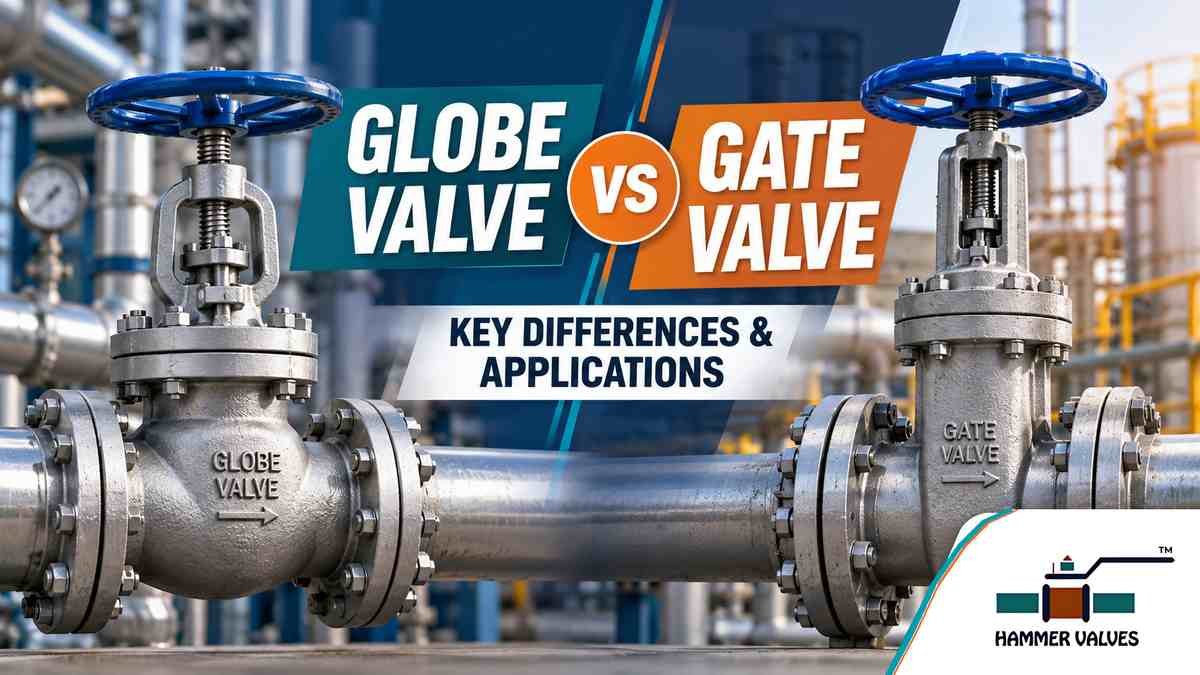
The main difference between a globe valve and a gate valve is their intended function. A gate valve is primarily used for isolation, whereas a globe valve is commonly selected for flow regulation.
The following comparison highlights the key differences.
| Comparison factor | Gate Valve | Globe Valve |
|---|---|---|
| Primary function | Starting and stopping flow | Regulating flow and providing shut-off |
| Internal mechanism | Gate or wedge moves across the flow passage | Disc or plug moves towards or away from the seat |
| Flow regulation | Not recommended for routine throttling | Suitable for throttling within its design limits |
| Pressure drop when fully open | Generally low | Generally higher |
| Flow path | Often relatively straight when fully open | Usually changes direction within the body |
| Operating characteristics | Typically requires multiple turns | Typically requires multiple turns |
| Typical application | Pipeline isolation | Flow adjustment and process control |
| Partial-open operation | Generally unsuitable for continuous throttling | Suitable when designed and operated for throttling |
| Selection priority | Isolation and low flow resistance | Controlled flow and adjustment |
Actual performance varies with valve size, trim design, pressure class, flow coefficient and operating conditions. Always refer to the manufacturer’s technical data for the specific model.
1. Difference in Valve Design
One of the most noticeable differences between a gate valve and a globe valve is their internal construction.
A gate valve uses a gate or wedge that moves across the flow passage. When fully open, the gate is lifted clear of the main passage in conventional designs. This arrangement helps minimise flow resistance.
A globe valve uses a disc or plug that moves towards or away from a seat. The fluid usually follows a more tortuous path through the valve body, which creates additional resistance.
Which is better?
If your application mainly requires opening or isolating a pipeline, a gate valve is often the more suitable option. If the system needs regular flow adjustment, a globe valve is generally the better choice.
2. Flow Control and Throttling
Flow regulation is one of the most important considerations when comparing a globe valve vs gate valve.
A gate valve is designed primarily for fully open or fully closed operation. Keeping it partially open for extended periods can expose the gate and seating surfaces to high-velocity flow, vibration and erosion.
A globe valve allows the opening to be adjusted more gradually. This makes it useful when the process requires changes in flow rate.
For example, a manufacturing plant may need to control the steam supplied to different sections of its process. A suitably selected globe valve can help operators adjust the flow to meet those requirements.
Keep in mind that a manually operated globe valve is not automatically a precise automatic control valve. Applications requiring accurate or continuous control may need a suitable control valve, actuator and control system.
3. Pressure Drop and Flow Efficiency
Pressure drop is another important difference.
When fully open, a conventional gate valve generally offers a relatively unobstructed flow path. This helps minimise pressure loss across the valve.
A globe valve typically creates more resistance because of its internal flow path and disc-and-seat arrangement. The resulting pressure drop can be higher, particularly at larger flow rates.
For example, in a long water distribution pipeline, unnecessary pressure loss can increase the energy required to move fluid through the system. A suitably sized gate valve may be preferable when the primary requirement is isolation.
However, low pressure drop should not be the only selection criterion. If a process requires regular flow adjustment, the additional resistance of a globe valve may be justified by the level of control it provides.
The final selection should account for flow rate, allowable pressure drop, valve sizing and the complete system design.
4. Shut-Off Performance
Both gate valves and globe valves can be used to stop fluid flow, provided they are correctly specified for the service.
A gate valve uses a gate or wedge that seats against the internal seating surfaces. Its shut-off performance depends on the design, material, condition of the seating surfaces and operating conditions.
A globe valve uses a disc or plug that closes against a seat. This arrangement can provide effective shut-off while also supporting flow adjustment.
Neither valve should be assumed to provide bubble-tight or zero-leakage shut-off without checking the applicable design standard and manufacturer’s specifications.
For critical isolation duties, confirm the required leakage class, pressure rating, fluid compatibility and testing requirements before purchasing.
5. Operating Torque and Maintenance
The effort required to operate a valve depends on several factors, including its size, pressure differential, seat design, stem arrangement and operating mechanism.
A gate valve may require considerable operating effort in larger sizes or under demanding pressure conditions. A globe valve can also require substantial force, particularly where the disc must overcome a significant pressure differential.
Both valve types need appropriate inspection and maintenance. Common checks include examining the stem, packing, handwheel, body joints and seating components for wear or leakage.
The maintenance requirements will depend on the fluid, temperature, operating frequency and installation environment.
For either valve, correct installation and operation are essential. A valve should not be forced beyond its intended operating limits, and maintenance should follow the manufacturer’s instructions.
6. Which Industries Use Gate and Globe Valves?
Both valve types are used across a wide range of industries, but the preferred design depends on the duty.
Water treatment and distribution: Gate valves are frequently used to isolate pipeline sections during maintenance. Globe valves may be used where a particular line requires flow adjustment.
Power plants: Gate valves can isolate sections of steam and utility piping. Globe valves are commonly used in steam-related applications where flow regulation is required.
Chemical and petrochemical plants: Both types may be used, depending on the fluid, operating pressure, temperature and process requirements. Material compatibility is especially important when handling corrosive chemicals.
Oil and gas: Gate valves are used for isolation in suitable pipeline and process services. Globe valves may be selected for regulating flow in specific process lines.
Manufacturing facilities: Gate valves help isolate equipment and utility lines, while globe valves can adjust the flow of water, steam and other process fluids.
No single valve type is ideal for every application. Engineers should select the design based on the actual duty rather than the industry name alone.
Gate Valve vs Globe Valve: Which One Should You Choose?
The right choice depends on what you expect the valve to do.
Choose a gate valve when:
- The main purpose is to isolate a pipeline.
- The valve will normally remain fully open or fully closed.
- Low pressure drop across the fully open valve is important.
- The application does not require routine throttling.
- The valve’s material and pressure rating match the operating conditions.
Choose a globe valve when:
- The process requires regular adjustment of flow.
- Operators need to increase or decrease the flow rate.
- The application benefits from a suitable throttling characteristic.
- The allowable pressure drop accommodates the valve’s design.
- The valve is correctly sized for the required operating range.
Before finalising your selection, check the following technical details:
- Fluid: Water, steam, oil, gas or chemicals.
- Operating pressure: Normal and maximum design pressure.
- Operating temperature: Including expected temperature variations.
- Flow rate: Required minimum, normal and maximum flow.
- Valve size: Based on the piping arrangement and flow requirements.
- Body and trim material: Selected for fluid compatibility and service conditions.
- Pressure class and standards: Appropriate to the system design and applicable regulations.
- End connections: Screwed, flanged, socket weld or another specified connection.
- Operating frequency: Occasional isolation or frequent flow adjustment.
- Maintenance access: Space available for operation, inspection and servicing.
For steam service, also consider the possibility of water hammer, thermal cycling and the applicable piping and boiler regulations. For corrosive service, verify material compatibility rather than relying on the valve’s general category.
Why Consider Hammer Valves from C.P. Valves Industry?
Selecting an industrial valve involves more than comparing product names. Buyers also need to consider material availability, pressure ratings, end connections, certifications and the supplier’s ability to understand their application.
C.P. Valves Industry has been serving the valve market since 1963 and offers a range of products under its HAMMER brand. The company provides valve solutions for industrial, plumbing, firefighting and HVAC applications.
Our product range includes both gate valves and globe valves, allowing buyers to explore different options according to their piping and flow-control requirements.
Depending on the product configuration, available options include different construction materials, sizes, pressure classes and end connections. Confirm the exact specifications and applicable approvals for the model required for your project.
Explore our products:
Our team can help you identify the relevant product range when you share your application details and technical requirements.
Frequently Asked Questions
1. What is the main difference between a globe valve and a gate valve?
The main difference is their intended function. A gate valve is primarily designed for pipeline isolation, while a globe valve is commonly used for flow regulation and throttling. Both can provide shut-off when correctly selected for the application.
2. Which valve is better for flow control: a gate valve or a globe valve?
A globe valve is generally better for flow control because its disc-and-seat arrangement allows the opening to be adjusted. A gate valve should not normally be used for continuous throttling because partial-open operation can damage its internal components.
3. Which valve has a lower pressure drop?
A conventional gate valve generally has a lower pressure drop than a comparable globe valve when both are fully open. However, actual pressure loss depends on the valve design, size, flow rate and internal geometry.
4. Can a gate valve be used for throttling?
Gate valves are generally not recommended for throttling. Operating them partially open can cause vibration, erosion and damage to the gate and seating surfaces. A suitable globe valve or control valve is usually preferable when regular flow adjustment is required.
5. Are globe valves suitable for steam applications?
Yes. Globe valves are commonly used in steam systems where flow adjustment is required. The selected valve must be suitable for the steam pressure, temperature, material compatibility and applicable standards. Not every globe valve is suitable for every steam duty.
6. Do gate valves and globe valves require the same maintenance?
Both require inspection of components such as the stem, packing, body joints and seating surfaces. However, the maintenance schedule and specific requirements depend on the valve design, service conditions, operating frequency and manufacturer’s recommendations.
7. How do I select the correct industrial valve?
Start by identifying the fluid, operating pressure, temperature, required flow rate and whether the valve is intended for isolation or regulation. Then confirm the valve size, material, pressure class, end connection and applicable standards with the manufacturer’s technical team.
8. Where can I buy Hammer gate valves and globe valves?
You can explore the Hammer Gate Valve range and Hammer Globe Valve range from C.P. Valves Industry. Contact the company with your required size, pressure rating, material and application to discuss suitable options.
When comparing a globe valve vs gate valve, the most important factor is the purpose of the valve within your piping system.
A gate valve is generally the better choice when the priority is isolating a pipeline with minimal flow resistance in the fully open position. A globe valve is usually more suitable when operators need to adjust flow or regulate a process.
Before purchasing either valve, consider the operating pressure, temperature, fluid properties, flow requirements, material compatibility and applicable standards. Choosing the correct valve for the duty can help improve system reliability and reduce avoidable maintenance problems.
Looking for the right industrial valve for your application?
C.P. Valves Industry offers Hammer gate valves and globe valves for a range of industrial and utility requirements. Our team can help you identify suitable product options based on your technical specifications.
Contact C.P. Valves Industry today to discuss your valve requirements.
- Website: https://cpvalves.com/
- Gate Valves: https://cpvalves.com/gate-valves/
- Globe Valves: https://cpvalves.com/globe-valves/
- Email: cpvalvesind@hotmail.com
- WhatsApp: +91 98209 73712
Choose the right valve for the right application with C.P. Valves Industry and HAMMER.


